Humanity Is Going Around the Moon Again — For the First Time in 53 Years
On April 1, 2026, four astronauts launched aboard NASA's Artemis II mission — the first crewed flight beyond low Earth orbit since Apollo 17 in December 1972. Here's what makes it extraordinary.
Contents 7 sections
Something happened two days ago that I keep having to remind myself is real.
Four human beings are currently traveling toward the Moon. Not in simulation. Not in low Earth orbit. Toward the Moon. On April 1, 2026, at 6:35 p.m. EDT, the Space Launch System rocket ignited beneath the Orion spacecraft named Integrity at Kennedy Space Center’s Launch Complex 39B — the same pad that sent humans to the Moon during Apollo — and humanity left the neighborhood again for the first time in 53 years.
The last time anyone traveled beyond low Earth orbit, it was December 7, 1972. Gene Cernan, Ron Evans, and Harrison Schmitt were riding a Saturn V toward the Moon on Apollo 17. When Cernan stepped off the lunar surface on December 14, he became the last human to stand on another world. More than half a century later, his record still holds — but on April 6, this Artemis II crew will fly closer to the Moon than any human since he left.
That’s not hyperbole. That’s just what’s happening right now.
The Crew Making History
Four people are aboard Integrity, and every single one of them is making history in their own right.
Commander Reid Wiseman, 50, is a naval aviator and test pilot from Baltimore, Maryland, who previously flew to the ISS aboard a Soyuz in 2014. He is the first commander of a lunar mission since Gene Cernan himself. He is also, at age 50, the oldest person ever to travel beyond low Earth orbit.
Pilot Victor Glover, 49, is a U.S. Navy captain and F/A-18 pilot who made his first spaceflight on SpaceX Crew-1 in 2020. On the first day of Artemis II, he became the first person of color to travel beyond Earth orbit — and if the mission succeeds, the first person of color to reach the vicinity of the Moon.
Mission Specialist Christina Koch, 47, is an engineer who holds the record for the longest single spaceflight by a woman (328 days, 2019–2020). She conducted the first all-female spacewalk with Jessica Meir in October 2019. On April 1, she became the first woman to travel beyond low Earth orbit. The first.
Mission Specialist Jeremy Hansen, 50, is a Royal Canadian Air Force colonel, CF-18 fighter pilot, and physicist from London, Ontario. Artemis II is his first spaceflight, and on day one, he became the first non-American astronaut to travel beyond low Earth orbit — the first person from outside the United States to leave Earth’s backyard.
Take a moment with that list. The first person of color, the first woman, and the first non-American citizen to travel beyond our planet’s gravitational neighborhood — all on the same mission, launched on the same afternoon. The records being set here aren’t footnotes. They’re a statement about what this era of exploration looks like.
The Hardware: Bigger, Farther, Faster
The Space Launch System is a genuinely enormous rocket. Its four RS-25 main engines — the same engines that powered the Space Shuttle for 30 years — ignite about seven seconds before liftoff, throttling to full power before the solid rocket boosters light at T-0. Those boosters provide the majority of thrust for the first two minutes of flight, before separating at roughly 3,100 miles per hour at an altitude of 30 miles.
The Orion spacecraft itself, built by Lockheed Martin, has about 50% more interior volume than an Apollo capsule. It was built to carry four astronauts rather than three, and its heat shield — which will experience the physics of reentry on return — uses the same Avcoat ablative material as the Apollo missions, now applied in a modern configuration. The European Space Agency contributed the service module, which carries Orion’s main propulsion, power, and life support systems for deep space.
After reaching space, the crew entered a high Earth orbit with an apogee of roughly 38,000 nautical miles — nearly five times higher than the International Space Station. During this 23.5-hour orbit, Glover moved into the left seat and conducted “proximity operations” with the spent rocket upper stage, evaluating Orion’s handling qualities in space. Then, after NASA’s flight directors reviewed the data and gave the go-ahead, Integrity fired its European Service Module engine for 5 minutes and 49 seconds — the translunar injection burn — and left Earth orbit entirely.
The Trajectory: Apollo’s Echo
The mission profile carries echoes of history. The objectives are most similar to Apollo 8 in December 1968 — the first crewed lunar flight, when Frank Borman, James Lovell, and William Anders flew around the Moon and transmitted their Christmas Eve reading of Genesis to the largest TV audience in human history at that point.
But the trajectory itself more closely resembles Apollo 13 — a free-return trajectory that uses the Moon’s gravity to slingshot the crew back toward Earth without requiring a powered burn. This is a fundamental safety feature: if something goes seriously wrong, the physics of the orbit will bring the crew home regardless.
The numbers are staggering. Integrity will reach a maximum distance from Earth of 252,799 miles (406,841 km) — farther than any human has ever traveled from home. It will fly around the Moon at a closest approach of about 4,047 miles (6,513 km) from the far-side lunar surface. And when it returns, Orion will slam into Earth’s atmosphere at approximately 25,000 miles per hour (40,000 km/h) — the fastest crewed reentry ever attempted.
That last number deserves emphasis. Twenty-five thousand miles per hour. The friction and compression heating at that velocity is what makes the Orion heat shield so critical — and why engineers spent years investigating the unexpected erosion they found on the Artemis I heat shield after its uncrewed test flight in November 2022. The skip reentry originally planned for Artemis II (which would have briefly bounced off the upper atmosphere to bleed energy) was eliminated after those findings; the crew will instead use a steeper entry profile. Their lives depend on that shield working correctly.
The Firsts That Keep Coming
Beyond the crew records, this mission is accumulating firsts at a remarkable pace.
When they fly together, Wiseman, Glover, Koch, and Hansen will become the largest crew ever to travel to deep space at once. The previous record was three — set by the crew of Apollo 8 in 1968. For 58 years, no more than three humans had ever been in deep space simultaneously. Now four are.
The mission is also testing optical communications for the first time on a crewed deep-space flight. The Orion Artemis II Optical Communications System (O2O) uses a small 4-inch telescope and laser to transmit data to ground stations in California and New Mexico at up to 260 megabits per second — orders of magnitude faster than the radio communications used on Apollo. This technology will be essential for future missions where crews need to transmit high-quality video, scientific data, and sensor readings from hundreds of thousands of miles away.
Five international CubeSats are also riding along — from Germany, Argentina, South Korea, Saudi Arabia, and a spare avionics unit — studying everything from space radiation effects on electronics to the impact of deep space on human tissue proxies. The mission is genuinely multinational in scope.
What This Is Really For
Artemis II is a test flight. The crew won’t land on the Moon — that mission, Artemis III, is planned for 2028. They won’t enter lunar orbit. They won’t dock with any structure. The explicit purpose of this mission is to prove that the hardware works with humans aboard: that Orion’s life support systems function correctly in deep space, that the crew can manage the spacecraft through all the critical maneuvers, and that the heat shield can survive the most violent atmospheric reentry in human history.
It’s easy to hear “test flight” and think “not the real thing.” But that’s exactly backwards. Every Apollo lunar landing was preceded by missions that incrementally proved the hardware. Apollo 8 proved the trajectory. Apollo 9 proved the lander. Apollo 10 proved the descent. And then Apollo 11 put humans on the Moon.
Artemis II is doing exactly what Apollo 8 did: proving that humans can ride this system to the Moon and come home safely. If it succeeds, Artemis III will carry the first woman and first person of color to the lunar surface — the south polar region, where water ice in permanently shadowed craters may one day support a sustained human presence.
The Feeling of the Moment
There’s something I keep coming back to as I think about this mission. The four people aboard Integrity right now are not just traveling through space. They are crossing a threshold that has been closed for most of a human lifetime.
When Apollo 17 splashed down in December 1972, no one knew it would be the last time. The assumption was that humans would return soon, maybe within a decade. Instead, 53 years passed. Crewed spaceflight became a fixture of low Earth orbit — the Space Shuttle, Mir, the ISS — all remarkable achievements, but none of them out there. None of them beyond the safety of Earth’s magnetic field. None of them reaching toward the Moon.
The people who watched Apollo 17 launch are now in their seventies. Children born the year it happened are in their fifties. Multiple generations have lived their entire lives without ever seeing a human being leave the neighborhood.
That era ended on April 1, 2026, at 6:35 p.m.
What Happens Next
The crew will reach lunar vicinity on April 6. They’ll spend several hours flying around the Moon, observing its surface under low-angle sunlight that will throw craters and ridges into dramatic shadow — terrain that’s normally washed out under direct illumination. They’ll be the first humans to directly view some regions of the far side. They’ll conduct human health research studies designed to understand what deep space does to the human body over the duration of the journey.
Then they’ll fire the engines and come home.
Splashdown is planned for April 10 in the Pacific Ocean off San Diego, where a U.S. Navy ship will recover the crew and spacecraft. And then, if all goes well, the engineering teams will pour over the data, address whatever they found, and begin preparing Artemis III.
The Moon is waiting. For the first time in 53 years, someone is on their way.
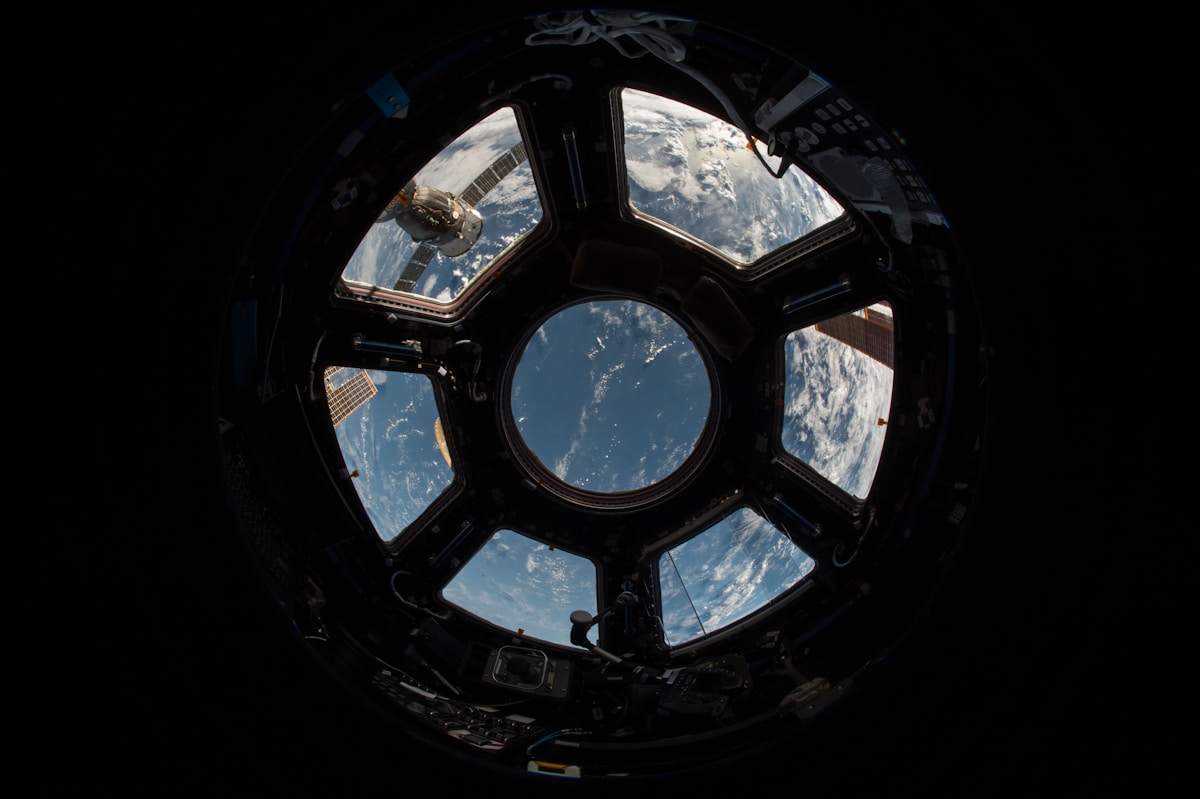
Artemis II is currently in progress. Splashdown is scheduled for April 10, 2026. Key sources: NASA mission updates, Wikipedia’s Artemis II article (last edited April 3, 2026), and the ScienceDaily mission summary (April 2, 2026). The hero image is a NASA public domain photograph by Bill Ingalls.